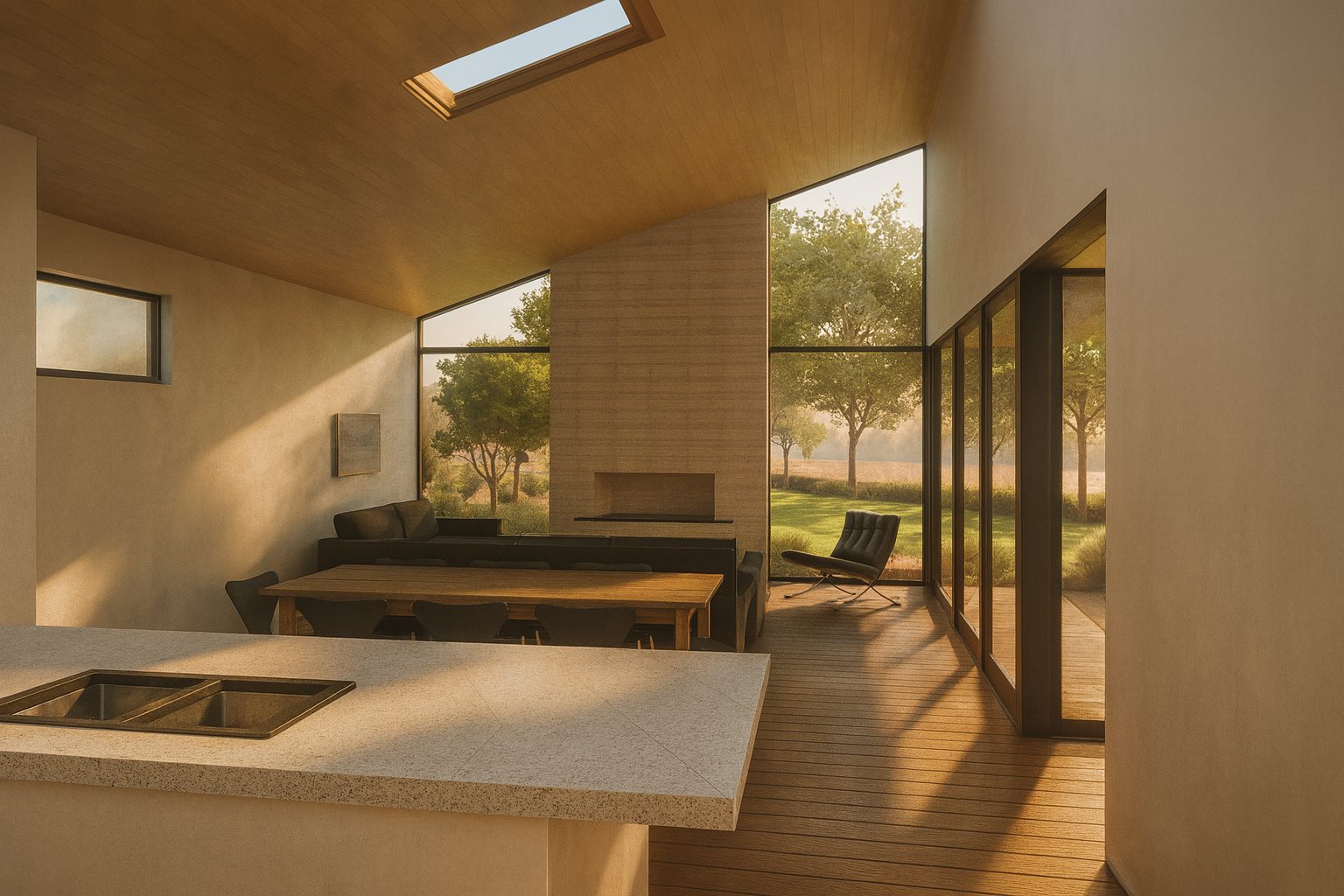
Almost every renovation brief we receive includes the words "open plan living." It's the most requested change to existing homes in New Zealand — and with good reason. Older houses, particularly villas, bungalows and 1960s-80s homes, were designed with separated rooms that don't suit the way most families live today. An open plan kitchen, living and dining area that connects to the outdoors transforms the feel of a home entirely.
But "open plan" is deceptively simple as a concept. Done well, it creates spaces that are light, connected and functional. Done badly, it creates a large, noisy, hard-to-heat room where nobody is comfortable. Here's what makes the difference.
What does an open plan extension cost in NZ?
| Project Type | Typical Cost Range (all in) |
|---|---|
| Internal reconfiguration only (no extension) | $80,000 – $180,000 |
| Small extension 20–30m² with kitchen | $180,000 – $320,000 |
| Medium extension 35–55m² with kitchen and deck | $280,000 – $500,000 |
| Large extension 55m²+ with full fit-out | $450,000 – $750,000+ |
"All in" means design fees, building consent, construction, kitchen, joinery, flooring and landscaping/deck — everything to get to a finished, liveable result. The kitchen alone accounts for $25,000–$100,000 of that depending on specification.
The most common budget mistake is focusing only on the construction cost and forgetting about the kitchen, flooring, deck and soft furnishings. A $300,000 build budget with a $60,000 kitchen is very different from the same build with a $20,000 kitchen — but the building consent drawings look identical.
Design principles that actually matter
Orientation is everything
In New Zealand, you want your main living spaces facing north to capture winter sun and natural light. A north-facing open plan extension with good eave overhangs will be warm in winter, cool in summer, and full of light year-round. A south-facing extension of the same size will be darker, colder, and require more heating. If you have a choice of which direction to extend, always consider where the sun is.
Connection to the outdoors
The indoor-outdoor flow is not a cliché — it genuinely changes how you use a space. A large sliding or bi-fold door that opens onto a deck at the same level as the interior makes the living area feel twice its size on good days. Get the threshold right: a step up or down between inside and outside breaks the connection. Flush-level transitions and continuous flooring materials (timber inside, similar-toned timber or concrete pavers outside) reinforce the connection visually.
Kitchen placement
Most people want the kitchen to connect to the living space without dominating it. A kitchen island or peninsula creates a natural separation between the working kitchen and the living area without closing the space off. Position the kitchen so the cook can see the dining table and the living area — and ideally face into the space rather than a wall.
Acoustic zones
One of the biggest complaints about badly designed open plan homes is noise. A kitchen island with overhead storage can dampen kitchen noise. Separating the TV area from the kitchen with a different level or a partial wall gives acoustic privacy without closing the space. Think about what activities happen simultaneously and design accordingly.
Ceiling height
Older New Zealand homes often have low ceilings — 2.4m is standard, some older homes have less. Raising the ceiling in the extension to 2.7m or 3.0m, or introducing a raked ceiling that follows the roofline, makes the space feel substantially larger and more generous. The cost premium is modest relative to the impact.
Do I need a building consent for an open plan extension?
Almost certainly yes. Any work that involves:
- Adding floor area (extending the footprint)
- Removing load-bearing walls
- New or relocated plumbing or drainage
- Structural alterations
...requires a building consent. The only exceptions are very minor non-structural work, which rarely applies to a meaningful open plan project.
Don't be tempted to skip consent. Unpermitted work creates real problems when you sell — buyers' solicitors will find it, banks may not lend against it, and you may be required to demolish or remediate at your own cost.
How long does an open plan extension take?
From first meeting to moving back in, a typical open plan extension project looks like this:
- Design (concept to consent drawings): 6–12 weeks
- Building consent processing: 20 working days statutory, but often 6–10 weeks in practice
- Builder tendering: 3–4 weeks
- Construction: 12–20 weeks depending on scope
Allow 9–14 months from start to finish, including some contingency for council processing times and builder availability. Starting the design process well before you need to move is the best approach.
Choosing between extending out and reconfiguring inside
Before committing to an extension, it's worth asking whether your existing footprint can give you what you want. Many older homes have:
- Underused formal lounges or dining rooms
- Dead corridor space
- Oversized bedrooms
- Enclosed laundries that could move to the garage
A skilled designer will look at the whole house, not just the obvious extension zone. Sometimes the best outcome comes from a combination of internal reconfiguration plus a smaller extension — rather than a large extension that simply adds space without improving the flow of the whole house.
We've designed dozens of open plan extensions across Auckland and Northland. If you're thinking about one, we're happy to walk through your home, look at what's possible, and give you an honest assessment of your options — before you commit to anything. First consultation is free.